Bina Mualaf Bumi Asri

New Muslim Learning

Islamic History

1. The World Before Islam

Before Islam emerged, the world was in a state of moral and spiritual darkness. Great empires like the Romans and Persians were constantly at war. In the Arabian Peninsula, society was lawless, idol worship was widespread, and social systems were deeply unjust—especially toward women and slaves.

2. The Birth of Prophet Muhammad (PBUH)

The Prophet Muhammad (peace be upon him) was born in Mecca in the year 570 CE. He came from the respected Banu Hashim clan of the Quraysh tribe. His father was Abdullah, and his mother was Amina. Orphaned at a young age, he was raised by his grandfather and then his uncle.

3. His Character and Youth

As he grew, Muhammad became known for his honesty and trustworthiness, earning the title Al-Amin (The Trustworthy). He worked as a merchant and married Khadijah bint Khuwaylid, a wealthy and noble woman. Their marriage was strong, and their children would play important roles in Islamic history.

4. The First Revelation and Prophethood

At age 40, while meditating in the Cave of Hira, Muhammad received the first revelation through the angel Gabriel. This marked the beginning of the Qur'an and his mission as the final Messenger of God, tasked with guiding humanity to monotheism and righteousness.

5. Preaching in Mecca and Opposition

At first, the Prophet preached privately to close friends and family. After three years, he began preaching publicly. The Quraysh leaders strongly opposed him, fearing a threat to their power and tradition. Persecution of early Muslims quickly followed.

6. The Migration to Medina (Hijrah)

After 13 years of harsh opposition in Mecca, the Prophet and his companions migrated to Yathrib (later known as Medina). This migration, known as the Hijrah, marks the beginning of the Islamic calendar and a turning point in Islamic history.

7. The Islamic State in Medina

In Medina, the Prophet established the first Islamic state based on justice and Islamic law. He united the Muhajirun (migrants from Mecca) and the Ansar (helpers from Medina), and drafted the Constitution of Medina, a groundbreaking document ensuring religious freedom and cooperation between different communities.

8. The Battle of Badr and Early Conflicts

The Battle of Badr was Islam's first major military victory. Despite being outnumbered, the Muslim forces defeated the Quraysh due to their faith and strategic planning. This was followed by the Battles of Uhud and Khandaq, which further tested and strengthened the Muslim community.

9. Treaty of Hudaybiyyah and Peaceful Dawah

In 628 CE, the Prophet signed the Treaty of Hudaybiyyah with the Quraysh, which initially seemed unfavorable. However, it allowed Islam to spread peacefully, and many Arab tribes embraced the faith during this period.

10. The Conquest of Mecca

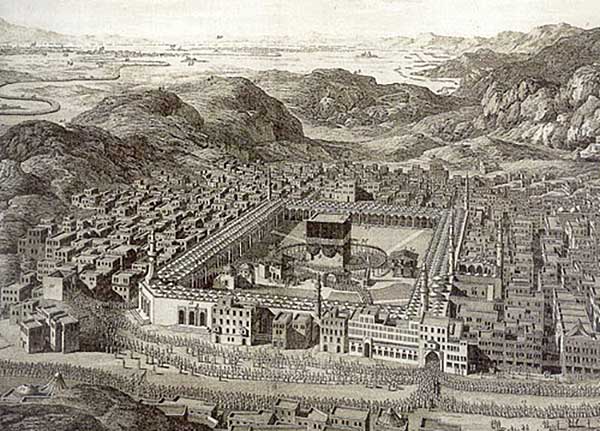
In 630 CE, the Prophet led a peaceful army of 10,000 Muslims into Mecca. The city surrendered without bloodshed. The Prophet forgave his former enemies, destroyed the idols at the Kaaba, and restored it as a place of monotheistic worship.

11. The Farewell Pilgrimage and Passing of the Prophet

In 632 CE, the Prophet performed his Farewell Pilgrimage and delivered a powerful final sermon emphasizing justice, equality, and adherence to the Qur'an and his Sunnah. Shortly after, he passed away in Medina at the age of 63.

12. The Era of the Rightly Guided Caliphs

After the Prophet's death, leadership passed to four Rightly Guided Caliphs: Abu Bakr, Umar, Uthman, and Ali. They upheld Islamic principles and expanded Muslim rule across Persia, the Levant, North Africa, and beyond—spreading justice and Islamic teachings.

13. The Umayyad Caliphate

The Umayyad Dynasty (661–750 CE) succeeded the caliphs and made Damascus its capital. Under their rule, Islam spread rapidly westward to Spain and eastward to India. They developed administration, coinage, and infrastructure across the growing empire.

14. The Abbasid Caliphate

The Abbasid Dynasty overthrew the Umayyads and moved the capital to Baghdad. This period is known as the Golden Age of Islam, marked by remarkable advancements in science, medicine, mathematics, philosophy, literature, and art.

15. The Mongol Invasion and the Fall of Baghdad

In 1258, the Mongols under Hulagu Khan sacked Baghdad and killed the Abbasid caliph, bringing a tragic end to a glorious era. However, Islamic learning and civilization continued to thrive in other regions like Egypt, North Africa, and India.

16. The Rise of the Ottoman Empire

In the 13th century, the Ottoman Empire rose from Anatolia, eventually becoming the most powerful Muslim empire. In 1453, Sultan Mehmed II (Mehmed the Conqueror) captured Constantinople, ending the Byzantine Empire and renaming the city Istanbul.

17. The Peak of Ottoman Power

The Ottomans ruled much of Southeastern Europe, the Middle East, and North Africa. They protected Islam's holy sites and maintained religious tolerance. Architecture, law, and governance flourished, and the sultans held the title of Caliph of the Muslim world.

18. The Decline and Fall of the Caliphate

By the 19th century, the Ottoman Empire faced internal decay and increasing pressure from European powers. After losing World War I, the Caliphate was officially abolished by Mustafa Kemal Atatürk in 1924, ending centuries of centralized Islamic governance.

19. Islam in the Modern Era

After the fall of the Caliphate, the Muslim world entered a new chapter—politically fragmented, yet spiritually alive. Muslim movements arose to revive Islamic knowledge, promote education, and resist colonial influence across the world.

20. Today's Challenges and the Future of Islam

Today, Muslims face global challenges—political division, misinformation, and identity crises. Yet, Islam continues to grow as one of the world's largest religions. With a return to knowledge, unity, and sincere practice, the future holds great promise for the ummah.